
Go See Live Music
- righttrackparentin
- May 12
- 7 min read

I am a word girl. Always have been.
When a song I know begins — anywhere, but especially live, with thousands of strangers around me — something takes over. I don't decide to sing. I just do. Every word, from the first note to the last chord of the encore. It's involuntary. It's joy. It's one of the purest feelings I know.
And it turns out, science has a very good explanation for why.
Before I get too far into the science and more, I want to share something: May is my month of deepest reflection — the month I lost my husband Chip in 2020. This month always brings me back to what matters most. This year, the month keeps bringing me back to music.
The last concert we attended together was The Revivalists at The Anthem — February 29, 2020. A leap day. Three months later, on May 31st, Chip's heart stopped. I think about that evening often. And I think about what it means to have been there, fully present, singing every word.
Your Voice Is a Biological Tool for Connection
When a group of people sing together — synchronized in breath, in pitch, in the vibration of sound — something measurable happens in the body. Oxytocin releases. The vagus nerve, that long wandering highway between brain and body, strengthens. Resting heart rate lowers. The biological markers of chronic loneliness actually decrease.

This isn't sentiment. This is physiology. Shared vocal vibration physically repairs a frayed nervous system. Which means that every time you've stood in a crowd belting out lyrics you've known by heart for twenty years, surrounded by strangers who love the same song you love — you were healing. You just didn't have the vocabulary for it yet.
As a speech-language pathologist with more than thirty years of practice, the voice has always been central to my work. But I want to be clear about something: connection through communication doesn't require a singing voice, or any voice at all. The child who uses AAC — augmentative and alternative communication — to tell their parent "I love you" for the first time is experiencing the same biological bridge. The teenager who signs to their best friend across a crowded cafeteria. The toddler who points at a dog and looks back at their parent's face to share the delight. Communication, in any form, is the cord that binds us together. The science of group singing is just one powerful, visible example of something much larger: we are wired for connection, and when we reach toward each other — voice open, heart open — our bodies respond.
The Year of Music
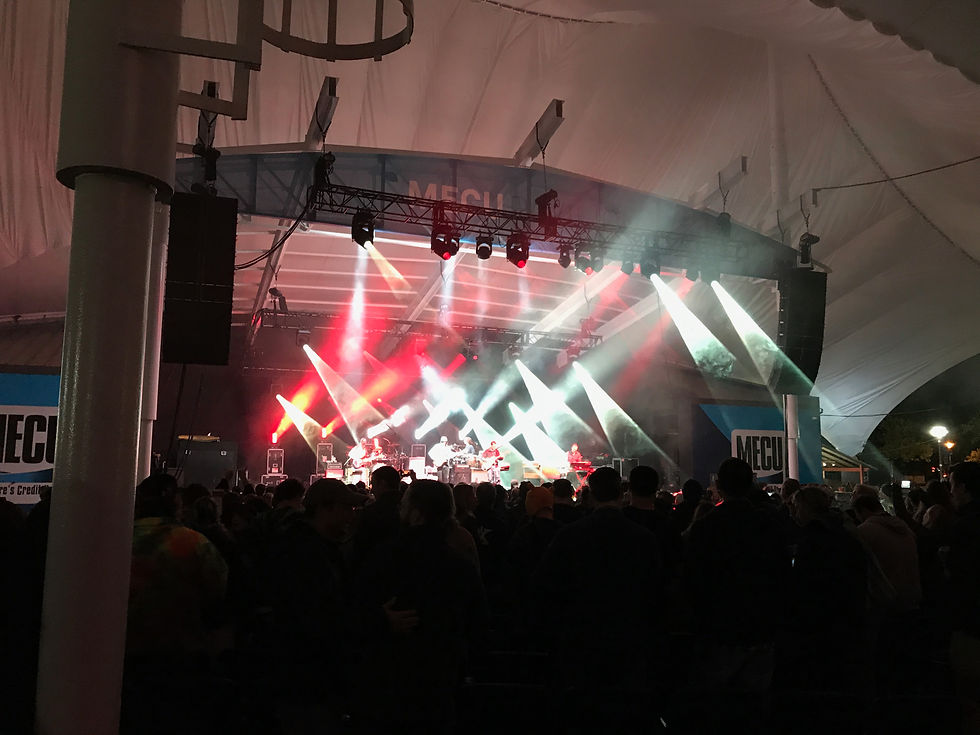
At the end of December 2017, just over 13 months into Chip’s Stage III (inoperable) pancreatic cancer diagnosis, I made a declaration to him: 2018 would be our Year of Music.
Not a resolution. A christening. I wanted us to attend at least one live concert every single month of the year. And we did.
By the time December 2018, we had seventeen concerts on our list of shows seen. The Killers at The Anthem in January kicked things off — the second time Chip and I had seen them together (the first was back in 2013, the night confetti fell on us during "Ms. Atomic Bomb" and a friendship was forged). Pink at Capital One Arena in April. The Tedeschi Trucks Band at Wolf Trap in July under the summer sky. A hot August music festival in Maryland where we caught The Revivalists headlining. New Order. Umphrey's McGee. Chip's own band, The Crazy Chesters, on stage in September and again in December.
And then, on November 25th, a solo acoustic show in our kitchen: Chip, playing "Long-Haired Country Boy" by Charlie Daniels. Just for us. I made sure to count it.
Of course I did.

2018 ended on December 29th — our wedding day. Music played. We danced. It was a year we had chosen, intentionally, to fill with sound and presence and the particular joy of being in a room where everyone has gathered for the same reason: because they love something, and they want to feel it together.
That is parenting, by the way. Not in the abstract. That's the actual practice — gathering together around something you love, showing your children what it looks like to choose joy, to show up fully, to let music move you to tears in front of them without apology.
What He Heard That I Didn't (At First)
Chip came to the experience of live music differently than I did.
I came for the lyrics. I am, as I said, a word girl. Give me a chorus I can shout and I am completely, happily lost in it.
Chip came for the conversations.
He was the one who introduced me to jam bands — and more importantly, taught me to listen to them. To hear the dialogue happening between musicians in real time. The way a guitarist answers a phrase the bassist just laid down. The moment a drummer changes the conversation entirely. The way improvisation is actually a form of listening, of deep attunement — one musician wondering about another, imagining what comes next, creating something that has never existed before and will never exist again.
Wonder before you worry. Imagine before you interpret. Create before you catastrophize.
I didn't know it at the time, but Chip was teaching me Investigative Parenting through music.
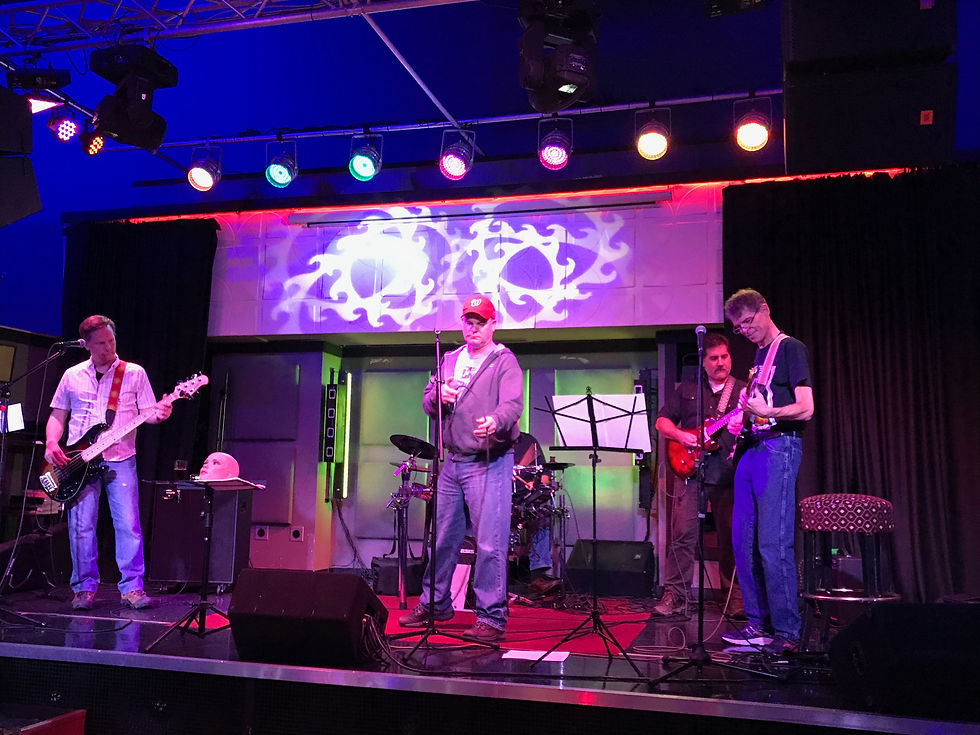
He played guitar himself — about 200 songs from memory, notes spread open in front of him on a music stand as he practiced the ones he was still learning. Playing was where he went to be fully himself, outside the reach of cancer, outside the weight of what was coming. Music reminded him of who he was before the diagnosis. It gave him back to himself.
In the final weeks of his life, he bought a beautiful pair of headphones. He would lie on the sofa and listen to Gregorian chants — slowly, quietly, completely. He told me they helped him relax. That they helped him connect with Heaven.
Mayo Clinic's Cancer Education Center writes that music can be calming and relaxing for cancer patients, and that it can specifically help reduce anxiety. I can tell you that is not abstract research in our house. I watched it. I sat beside it. I am still, six years later, grateful for every note he ever played and every song he ever heard.
Something He Believed In Is Still Here

In June 2019, Chip and I traveled to California to celebrate the 20th anniversary of JamBase — a live music discovery platform he had believed in enough to invest in during its earliest days. I stood in that room proud of him. Proud of the thing he had put his faith in, the bet he had made that live music was worth protecting and connecting people to.
I thought about JamBase recently and looked it up, half-expecting that the age of AI and streaming algorithms might have made it obsolete. Instead, I found a living, adapting platform — still connecting music lovers to live shows, now even with its own chatbot.
Something he believed in outlasted his life and kept going. I find that genuinely comforting.
What This Has to Do With Your Children
Everything.
When you go to a live concert, you are not just having fun. You are regulating your nervous system. You are flooding your body with oxytocin. You are practicing the art of presence — being fully in a room, fully in a moment, with other humans who have gathered for the same reason.
When you take your children to live music, you are showing them something they will never forget: a parent who knows how to be moved. Who lets tears come. Who sings every word without embarrassment. Who reaches toward other humans in a crowd, toward strangers united by one shared love, and feels less alone because of it.
That is not a small thing to model. That is everything.
Mayo Clinic notes that listening to and playing music helps people express and communicate emotions in a safe way, and can bring peace, comfort, and closure — not just for those facing illness, but for anyone navigating the full weight of being human.

In the End, Only Three Things Matter
A few days ago I came across an article by Andy Murphy, written at the bedside of his dying friend. Her final wisdom, distilled to three things that truly matter in life and at the end of it: how much you loved, how gently you lived, how gracefully you let go of the things not meant for you.
Murphy explained in his article that gentle living is not soft or passive. It is eyes soft and nervous system open. It is breathing easily enough to be present. Going to live music with the people you love is one of the most concrete, science-backed, soul-nourishing ways I know to practice gentle living out loud.
I have been turning Murphy's friend's three things over ever since I read the article, the way you turn a stone in your hand. Go see live music. With your children. With your partner. With your oldest friend. Alone, if that's what you have right now — because a crowd of strangers who love the same song you love is its own kind of company.
Love well. Live gently. Let go gracefully.
And while you still can — go see live music. This is the only life we have.

About the Author
Cindi Z. Stevens Copeland, MA, CCC-SLP, is a speech-language pathologist with more than 30 years of experience working with children and families. She is the founder of Right Track Parenting and the creator of the Investigative Parenting methodology — a research-backed framework that guides parents to wonder before they worry, imagine before they interpret, and create before they catastrophize. Cindi holds a Certificate in the Foundations of Positive Psychology from the University of Pennsylvania and is a certified Parent Coach through the Parent Coaching Institute. She runs a direct-pay private practice in Northern Virginia and is the creator of LUMA, an AI-powered parenting assistant available at RaisingHumans.ai (coming soon!). Learn more about Cindi and Right Track Parenting at righttrackparenting.com.
© 2026 Right Track Parenting. All rights reserved. No part of this blog may be reproduced or distributed without written permission.


Comments